Can we help?
+33 (0) 4 50 79 08 38
We all speak English and French!
Send an emailBook NowThe Francophonie refers to all the people and countries around the world where French is spoken.
It is also represented by the Organisation internationale de la Francophonie (OIF), whose colourful logo reflects the diversity of cultures connected through the French language.
Today, the Francophonie brings together more than 80 countries and governments, spanning every continent. It is not just a linguistic space—it is a global community.
Not at all—and that’s actually one of the most fun parts of learning French.
While French speakers around the world understand each other, the language comes with a variety of accents, expressions, and local twists that reflect each region’s culture and history.
You’ll hear what is often considered “standard” French, but even within France, there are many regional differences.
For example:
French takes on a whole new flavour—dynamic, expressive, and full of unique vocabulary.
Some examples:
You might also hear stronger, more musical accents and expressions that feel closer to older forms of French.
Swiss French is very close to standard French, but with some charming differences.
For example:
Much more logical—and often easier for learners!
French is widely spoken across many African countries and is constantly evolving.
You’ll hear:
For example:
French remains one of the most influential languages globally:
It is also a key language in international organisations such as the United Nations and the European Union.
French is not only a language of culture—it is also a language of education, business, and global communication.
Why is French so useful for travel?
France is the world’s most visited countries, and speaking French can completely transform your experience.
It allows you to:
French is not limited to France. It opens doors to a wide range of destinations:
Speaking French means you can travel across multiple continents with one language.
Learning French offers much more than just language skills. It gives you:
It is a language that connects people, ideas, and experiences across the world.
The Francophonie is vast, dynamic, and constantly evolving.
Learning French is not just about mastering grammar or vocabulary—it is about opening the door to a global network of cultures, opportunities, and connections.
👉 The Francophonie is vast—and learning French is truly worthwhile.
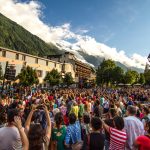
Summer in Chamonix is the perfect time to discover the beauty of the Mont Blanc valley. With stunning hikes, outdoor adventures and world-class events, the town comes alive from June to September. For students learning French, Chamonix offers the ideal combination of language practice, local culture and unforgettable alpine experiences.…
Continue Reading
A beginner’s guide to the secret season of Chamonix: If you come to Chamonix in winter, the town is packed with skiers, climbers, and tourists. In summer, it’s full of hikers, trail runners, and people heading into the mountains. But between those two big seasons comes something locals know very…
Continue Reading
For many French learners, one situation feels surprisingly stressful: ordering food in France. You arrive at the restaurant. The waiter walks over. Suddenly, every French word you have ever learned disappears from your brain. The good news? You do not need perfect French to eat out confidently in France. In fact, most…
Continue Reading
Spring is in the air, the snow is melting, and the Alps are alive with festive cheer! Easter—Pâques [pahk] in French—is a magical time to explore French traditions, try delicious seasonal treats, and enjoy the mountains. If you’re planning a holiday in France, there’s no better way to experience culture,…
Continue Reading





All courses available either in person or via Zoom or Teams. Please contact us for more information
Vous recherchez des Cours d'Anglais? Cliquez-ici.